
 6 min read
 5 views
Japanese Counters Made Simple: Complete List with Practice Quiz
Japanese counters are the small words that tell you what you are counting: people, books, bottles, machines, animals, and more. Learn the most useful counters in groups, memorize their sound changes, and practise them in short sentences instead of attacking one giant list.
Japanese counters are grammatical words used after a number to classify the thing being counted. English usually says three books, but Japanese says 本を三冊, hon o sansatsu, literally books three-counter. The counter is not decoration: it carries information about the object.
Here is the good news: you do not need to master every counter at once. Start with つ, 人, 個, 本, 枚, 冊, 台, and 匹. Those eight cover a huge amount of beginner Japanese. Then add time, floors, frequency, and specialised counters as your reading grows. If numbers themselves feel shaky, review this Japanese numbers 1 to 10 guide first.
How do Japanese counters work?
The basic pattern is:
number + counter
For example:
- りんごを三つ買いました。
Ringo o mittsu kaimashita. — I bought three apples. - 学生が二人います。
Gakusei ga futari imasu. — There are two students. - 本を五冊読みました。
Hon o gosatsu yomimashita. — I read five books.
The counter usually follows the number and comes before particles such as を, が, に, or あります. In a question, 何, nani or nan, combines with a counter: 何人, nan-nin, means how many people, while 何冊, nan-satsu, means how many books.
Japanese counters also change pronunciation. This is where learners often trip: 一本 is ippon, not ichi-hon, and 三本 is sanbon, not san-hon. Think of the counter as a shape-shifter. The meaning stays stable, but the sound adapts to the number beside it.
For a wider overview of number pronunciation, writing, and everyday use, keep the complete Japanese numbers guide nearby. Counters become much easier when the numbers themselves are automatic.
The essential Japanese counters for beginners
1. つ: general objects from 1 to 10
The counter つ is the beginner-friendly all-purpose option for many physical things. It is especially useful when you do not know, or do not need, a more specific counter. However, つ is normally used only up to 10. It is not a licence to count everything forever.
- 一つ — hitotsu — one
- 二つ — futatsu — two
- 三つ — mittsu — three
- 四つ — yottsu — four
- 五つ — itsutsu — five
- 六つ — muttsu — six
- 七つ — nanatsu — seven
- 八つ — yattsu — eight
- 九つ — kokonotsu — nine
- 十 — tō — ten
Example: ケーキを三つください。Kēki o mittsu kudasai. — Three cakes, please. Notice that the native readings are irregular. They are worth learning as one compact chant: hitotsu, futatsu, mittsu, yottsu.
2. 人: people
Use 人, nin, for people. Most numbers are predictable: 三人 is san-nin, four people is 四人, yon-nin, and five people is 五人, go-nin. The first two are special:
- 一人 — hitori — one person
- 二人 — futari — two people
- 三人 — sannin — three people
- 四人 — yonin — four people
Example: パーティーに六人来ました。Pātī ni roku-nin kimashita. — Six people came to the party. Do not say ichi-nin for one person or ni-nin for two people. Those forms are classic beginner traps.
3. 個: small, compact objects
個, ko, counts individual small items such as eggs, boxes, pieces of fruit, and sweets. It is a practical alternative when a more specific counter is unnecessary.
- 一個 — ikko — one
- 二個 — niko — two
- 三個 — sanko — three
- 四個 — yonko — four
- 五個 — goko — five
- 六個 — rokko — six
- 八個 — hakko — eight
Example: 卵を六個買いました。Tamago o rokko kaimashita. — I bought six eggs. The doubled consonant in ikko, rokko, and hakko deserves attention. Say it crisply, like a tiny drumbeat: i-kko.
4. 本: long, cylindrical objects
本, hon, counts long, narrow objects: bottles, umbrellas, pencils, trees, and bananas. It does not mean book in this use, even though 本 can also mean book as a noun.
The important sound pattern is:
- 一本 — ippon — one
- 二本 — nihon — two
- 三本 — sanbon — three
- 四本 — yonhon — four
- 五本 — gohon — five
- 六本 — roppon — six
- 八本 — happon — eight
- 十本 — juppon — ten
Example: 水を二本お願いします。Mizu o nihon onegaishimasu. — Two bottles of water, please. Remember the mini-story: one bottle punches the counter into ippon; three makes it bounce into bon; six doubles the beat into roppon.
5. 枚: flat and thin objects
枚, mai, counts flat items such as sheets of paper, tickets, shirts, plates, and photographs. This one is beautifully regular:
- 一枚 — ichimai — one
- 二枚 — nimai — two
- 三枚 — sanmai — three
- 四枚 — yonmai — four
- 五枚 — gomai — five
Example: チケットを二枚買いました。Chiketto o nimai kaimashita. — I bought two tickets. Imagine every ticket as a thin sheet floating like a leaf. Flat equals mai.
6. 冊: bound books and magazines
冊, satsu, counts bound volumes: books, notebooks, manga, and magazines. It is one of the most useful counters for reading practice.
- 一冊 — issatsu — one book
- 二冊 — nisatsu — two books
- 三冊 — sansatsu — three books
- 四冊 — yonsatsu — four books
- 八冊 — hassatsu — eight books
Example: 毎月、本を二冊読みます。Maigetsu, hon o nisatsu yomimasu. — I read two books every month. For more support with book-related sentences, practise alongside these beginner Japanese reading passages.
7. 台: machines and vehicles
台, dai, counts machines and vehicles: cars, computers, televisions, bicycles, and printers.
車が二台あります。Kuruma ga ni-dai arimasu. — There are two cars.
Unlike 本 and 個, 台 is mostly kind to your pronunciation. That makes it a useful confidence-building counter after the more irregular patterns.
8. 匹, 羽, and 頭: animals
Japanese divides animals by type and size:
- 匹, hiki — small animals such as cats, dogs, fish, and insects
- 羽, wa — birds and rabbits
- 頭, tō — large animals such as horses, cows, and elephants
Examples include 猫が三匹います, neko ga san-biki imasu, there are three cats; 鳥が二羽います, tori ga ni-wa imasu, there are two birds; and 馬が一頭います, uma ga ittō imasu, there is one horse.
匹 has sound changes similar to 本: 一匹 is ippiki, 三匹 is sanbiki, and 六匹 is roppiki. The animal has not changed size; the pronunciation has simply put on a ninja disguise.
Useful counters for time, frequency, and places
Once the object counters feel comfortable, add these high-frequency choices:
- 回, kai: number of times. 三回, san-kai, three times.
- 階, kai: floors of a building. 四階, yon-kai, fourth floor. In some accents, 七階 may be nan-kai or nana-kai.
- 歳, sai: age. 二十歳 is hatachi, meaning 20 years old, an important irregular form.
- 分, fun/pun: minutes. 五分 is go-fun, but 十分 is juppun, ten minutes.
- 日, nichi/ka: days or dates. 一日 may be tsuitachi for the first day of a month, or ichinichi for one full day.
- か月, kagetsu: duration in months. 三か月, san-kagetsu, three months.
- 年, nen: years or school years. 三年, san-nen, three years.
Context decides the meaning. 三回 means three times, while 三階 means the third floor. They sound alike, so listen for surrounding words. If you are building broader grammar confidence, the Japanese particles guide can help you see how counters fit into complete sentences.
Japanese counters: a memory system that works
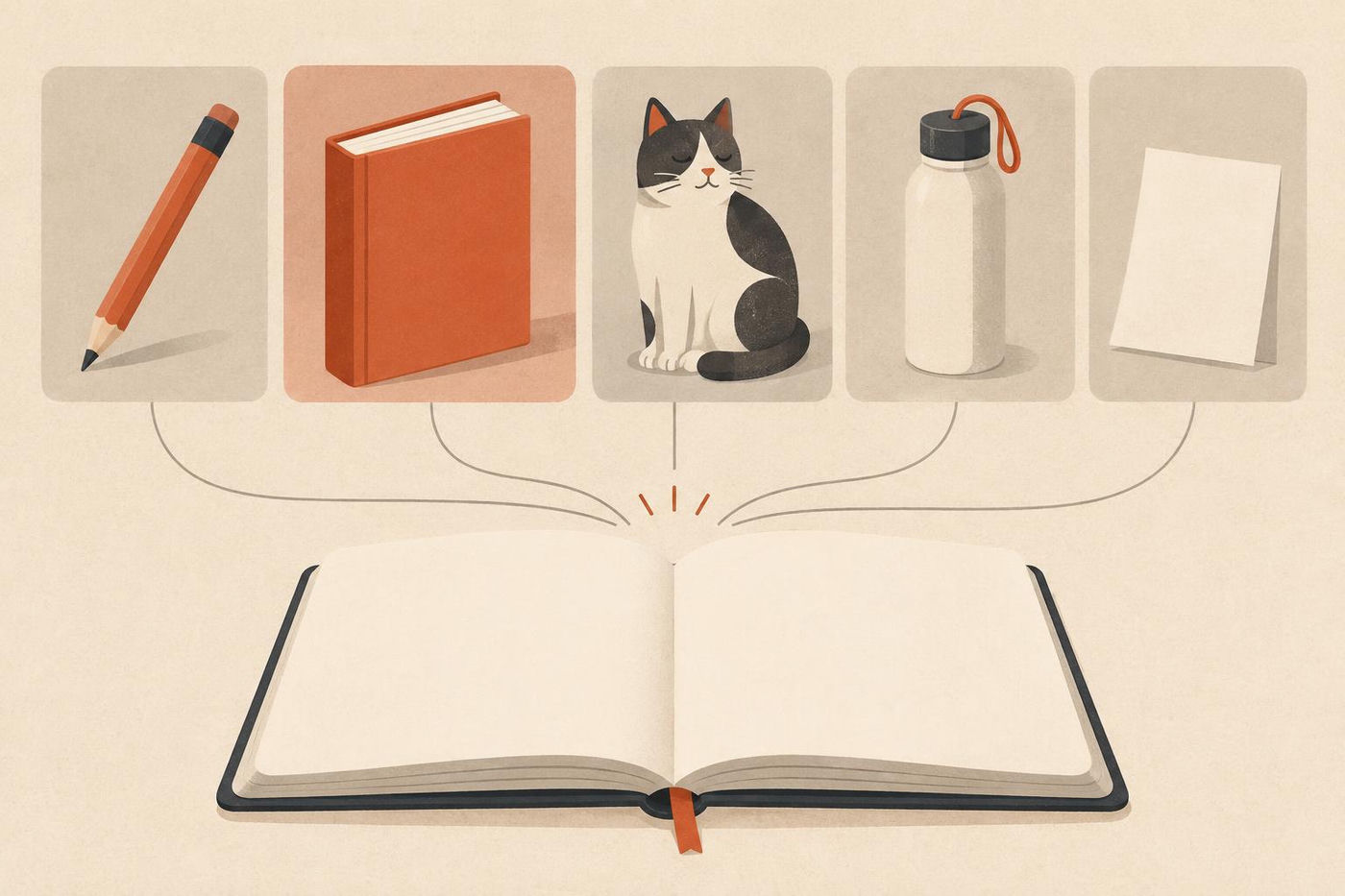
Do not memorise a counter as an isolated translation. Attach it to a visual category and a sentence. Here is the Kanji Ninja method:
- Choose a category. Picture a flat ticket for 枚, a long bottle for 本, or a bound manga volume for 冊.
- Learn three anchor numbers. Start with one, three, and six. These expose many sound changes: ippon, sanbon, roppon.
- Say a useful sentence aloud. For example, 水を一本ください。Mizu o ippon kudasai. — One bottle of water, please.
- Test both directions. See 三冊 and produce sansatsu; hear sanbiki and identify three small animals.
- Review in spaced bursts. Five minutes today, tomorrow, three days later, and one week later beats one exhausting memorisation session.
Flashcards work best when they test a situation, not just a translation. One card might show three bottles and ask for the Japanese phrase. Another might show 三枚 and ask what kind of object fits. This approach turns recognition into recall. For a practical review routine, see these tips on using Japanese flashcards effectively.
Quick practice quiz: choose the right counter
Cover the answers first. Your mission: choose the counter and read the complete phrase.
- Two people: 人, 枚, or 冊?
- Three books: 本, 冊, or 台?
- One umbrella: 本, 匹, or 個?
- Four tickets: 枚, 人, or 羽?
- Six cats: 匹, 台, or 頭?
- Two computers: 台, 冊, or 本?
- Five times: 回, 階, or 歳?
- Eight general objects: つ, 人, or 冊?
Answers and pronunciation
- 二人, futari — two people.
- 三冊, sansatsu — three books.
- 一本, ippon — one umbrella.
- 四枚, yonmai — four tickets.
- 六匹, roppiki — six cats.
- 二台, ni-dai — two computers.
- 五回, go-kai — five times.
- 八つ, yattsu — eight general objects.
Score 8 out of 8? Excellent—now make each answer a sentence. Score 5 to 7? You have the system; review the sound changes. Score 0 to 4? No problem. Return to the core eight counters and build your next small win. You can also use Yuzunihon’s Japanese grammar quizzes for additional retrieval practice.
How Japanese counters help with JLPT preparation
Counters appear in vocabulary questions, listening dialogues, reading passages, shopping situations, schedules, and everyday announcements. A learner who knows the number but misses the counter may misunderstand whether the speaker means people, books, minutes, or floors.
For JLPT N5, prioritise つ, 人, 個, 本, 枚, 冊, 台, 匹, 回, and the basic time counters. As you move toward N4 and N3, collect counters from real sentences rather than memorising a disconnected catalogue. Track the counter, its reading, its category, and one example sentence in your notes. The JLPT preparation guide can help you organise that study, while the Japanese reading comprehension exercises give you a chance to meet counters in context.
Most importantly, read counters aloud. Japanese sound changes become much easier when your mouth has practised them: ippon, sanbon, roppon; ikko, sanko, rokko; ippiki, sanbiki, roppiki. Rhythm is memory wearing sneakers.
Final takeaway
Japanese counters look intimidating because they classify the world in more detail than English does. In practice, they are a set of reusable patterns. Learn the object category, watch for pronunciation changes, and attach every new counter to a sentence you could genuinely say.
Start today with one small mission: count five objects around you in Japanese. Then turn each answer into a sentence. Small counters, big progress.
 0 like